
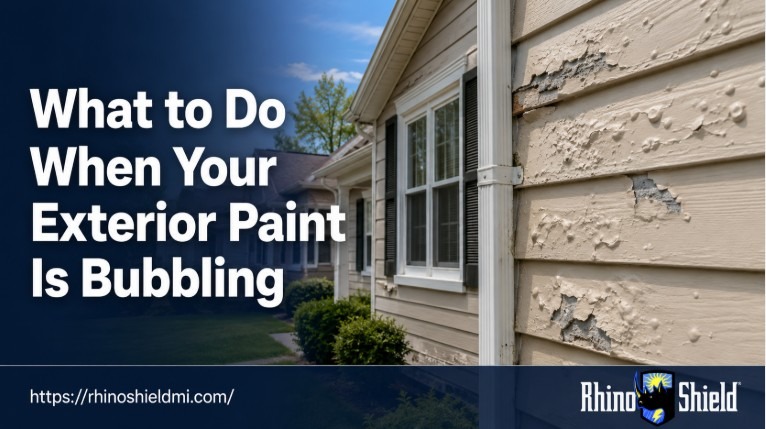
Picture a south facing wall on a hot July afternoon. One of our crew leaders runs a thumb across the siding and the bubbles feel warm and hollow, like thin shells. Then he walks to the corner of the same house, near a downspout. The bubbles there feel cool and soft, and the board behind them is damp.
Same house. Same paint. Two completely different problems.
When your exterior paint is bubbling, something is pushing the paint film off the surface. It is either trapped heat and solvent or trapped moisture, and you need to know which one before you touch it. Do not paint over it.
The Short Answer
Exterior paint bubbles when heat, moisture or contamination pushes the film off the surface. Slice one bubble open and look underneath. Another paint layer means heat or application. Dark or damp wood means moisture. Fix the cause first, then scrape, prime and recoat.
Bubbles do not heal. They grow, burst and turn into peeling.
Quick Diagnosis: Heat, Moisture or Application?
You do not need tools for the first look. You need a sharp knife, a few minutes and a good light.
| What you see | Likely cause | Next step |
| Bubbles on a sunny south or west wall in summer, hollow when cut | Heat or solvent blistering | Let it cure, then scrape, sand smooth and recoat |
| Bubbles with damp or dark wood underneath | Moisture blister | Find the water source before any paint goes on |
| Bubbles on lower courses or shaded walls days after painting, following rain or dew | Painted in poor conditions | Wait for dry weather, scrape, prime bare spots, recoat |
| Bubbles around windows, doors and trim joints | Failed caulk or open joints | Remove old caulk, let the wood dry, reseal |
| Bubbles on a wall that backs onto a bathroom or kitchen | Indoor vapor pushing outward | Check the vent and the fan, then deal with the wall |
| Bubbles years after a good paint job, near the roofline | Roof or gutter water | Have the roof edge and gutters checked first |
Three questions I ask first
- When did it appear? Days after painting points to conditions. Months or years later points to moisture.
- Where is it? A sunny wall suggests heat. A wall below a roof edge or next to a downspout suggests water. A wall behind a bathroom suggests indoor humidity.
- What is under it? This is the one that settles it.
How to cut one bubble open
Use a utility knife and slice across a single bubble. Peel back the paint and look at the surface under it.
The National Park Service explains this same test in its federal guide, Preservation Brief 10 on exterior paint problems. If another layer of paint shows underneath, the blister is probably caused by solvent and heat. If bare wood shows, moisture is the likely culprit.
I teach this to every homeowner who calls us. It takes two minutes and it saves a lot of guessing.
Why Your Exterior Paint Is Bubbling
Heat blisters and trapped solvent
Paint dries from the top down. In strong sun, the surface can skin over before the layer below has finished drying. The solvent underneath has nowhere to go, so it expands and pushes up through the film.
Dark colors and thick coats make it worse because they hold more heat. These bubbles are usually small and dry inside. They look bad, but they are not a sign of water in your wall.
The sun matters for how paint should be applied, too. A careful crew follows the shade around the house instead of painting a wall in full midday sun.
Moisture blisters
This is the one that worries me. Moisture blisters form when water or vapor gets behind the paint and pushes it out.
Water can come in as a liquid through open joints, cracked caulk, end grain and roof edges. It can also arrive as vapor. In a Michigan winter, a warm and humid house pushes moisture outward through the walls. When that vapor reaches the cold back of the paint film, it condenses and lifts the coating.
Here is a scene we run into. A homeowner calls about bubbles on one section of an outside wall. We find it backs onto a bathroom. We check the exhaust fan and discover the vent ends in the attic, not outside. All winter, steam has been travelling into the wall cavity and out through the siding.
The fix there is not paint. A remodeler or an HVAC professional needs to vent that fan properly first. After that, the wall can dry and we can recoat it. Paint comes after the cause.
If you suspect ice dams are behind your bubbles near the roofline, the same rule applies. Find where the water enters before anyone coats the wall.
Contamination and incompatible coatings
Paint will not stick to what is sitting on the surface. Oil, wax, silicone, dirt and chalky residue all cause bubbling. So does putting one type of paint over another that does not agree with it.
This one is simple to avoid. Wash the wall, let it dry and use the right primer.
Bad timing: dew, rain and cold nights
Fresh paint needs time to cure before it gets wet. If dew settles on the wall after sunset, or a rain shower comes through before the film is ready, moisture can get trapped under the surface.
This is why a late fall paint job is risky in Michigan. The days look fine, but the evenings are damp. Check the label on your product for the minimum temperature and the dry time before rain, and follow it.
What To Do Right Now
You have time to do this calmly. A few careful steps now can keep a small problem small.
- Photograph and mark the area. Take wide and close shots, and note which wall it is on.
- Cut one bubble open. Read what is underneath, using the test above.
- Check what is behind the wall. Look for a bathroom, laundry, roofline, gutter or window on the other side.
- If it is moisture, call the right trade. A roofer, gutter installer or remodeler may need to fix the source. Let the wall dry out afterward.
- If it is only a heat blister, wait for dry weather. Scrape the loose paint, sand the edges smooth, spot prime any bare wood and recoat.
- If your home was built before 1978, stop before scraping. Older paint may contain lead. The EPA Renovation, Repair and Painting program explains that paid contractors working on these homes must use lead safe work practices.
- Do not wait through another winter on a moisture blister. Repeated moisture is how paint problems turn into rot.
What Not To Do
A few shortcuts make bubbling worse.
- Do not paint over bubbles. The new coat will fail and the bubbles will come back.
- Do not pop them and ignore the wall. Popping is not a repair, and the cause is still there.
- Do not seal the wall with another heavy film to lock water out. If the water source is inside the wall, you only trap it.
- Do not caulk over wet or failed joints. Take the old caulk out first.
- Do not blast it with a pressure washer. High pressure can drive water behind the paint. See our article on whether pressure washing can damage exterior paint.
- Do not assume it is only cosmetic until you have cut one open.
A Practical Example: One House, Two Kinds of Bubbles
Here is how our crew works through a house like the one I described at the start.
We begin by looking. We walk every wall in good light and note where the bubbles are and which direction each wall faces. Then we touch. Hollow and warm usually means heat. Cool and soft usually means moisture.
Next we cut a few bubbles open on each wall. On the sunny wall we find old paint layers underneath and dry wood. On the corner by the downspout we find dark wood and a few droplets of water.
Then we probe. A screwdriver pressed gently into the wood tells us whether it is still sound. After that we trace the source. In this case, the downspout was dumping water against the base of the wall.
On a fresh paint failure, the pattern looks different. We see bubbles on the lower courses and the shaded walls, because dew or rain reached the film before it cured. The crew scrapes the affected paint, lets the wood dry fully, primes the bare spots and recoats in proper conditions.
The homeowner gets a written plan from us: what needs repair, what needs prep and what gets coated. Nothing is a mystery.
If you want a second set of eyes, send us a photo of the bubbles and tell us which wall they are on. We will tell you honestly what we see. You can also book a quick 5 minute call and talk it through.
Repair, Recoat or Replace
| Situation | Best path |
| Heat blisters on sound wood | Scrape, sand smooth, prime bare spots, recoat |
| Moisture blisters, source fixed, wood sound | Let it dry, scrape, prime, recoat |
| Soft or dark wood under the paint | Replace the damaged wood first |
| Widespread failure across several walls | Full prep and recoat |
Soft wood needs carpentry before it needs paint. Our page on substrate and repairs explains how we handle wood, stucco and fiber cement before any coating goes on.
If you are a seller, a landlord or on an HOA board, bubbling paint tends to draw attention at inspections. A proper repair is usually cleaner than a quick touch up.
Where a Ceramic Elastomeric Coating System Fits, and Where It Does Not
Let me tell you about a house where I said not yet. The owner called about bubbling on one wall and wanted it coated right away. We looked closer and traced the bubbles to a window leak above. Water was coming in at the head of the frame and running down behind the siding.
I told him to have the window flashing fixed first. He was not thrilled, but coating that wall would have only hidden the leak for a season or two. I would rather lose a job than do that to a customer.
Rhino Shield is a ceramic based acrylic elastomeric coating system. It is flexible, it is breathable so trapped vapor can escape, and it is water resistant. But it is a coating. It does not stop liquid water from entering through a leak, and it cannot repair rot.
What it does well is deal with the surface problems. Our 11 step coating process includes cleaning, patching, scraping loose paint, caulking and full area priming before the high build ceramic finish coat goes on. To learn more about the product itself, see what Rhino Shield is.
It comes with a written 25 year “No Chip, Crack, or Peel” limited warranty. It is transferable and not prorated, and the terms are in writing. Read the full details on our 25 year warranty page.
Cost and Timing in Michigan
A small repair on one wall costs a fraction of a full job. A full prep and coating costs more, and it depends on how much of the house is affected.
For a coating system, a typical 3 bedroom home with about 2,000 square feet of wall area runs roughly $13,000 to $18,000. That is about two to two and a half times a traditional paint job, which can cost $5,000 to $9,000 and usually needs repeating every 5 to 7 years. You can read the full breakdown on our pricing page.
Timing matters. Heat blisters tend to show in summer. Moisture problems are easiest to trace in spring and fall, when you can see where water collects. Painting needs dry and moderate weather. Some newer exterior products can go on in cooler temperatures, but always follow the product label.
Frequently Asked Questions
Will bubbling paint go away on its own?
No. Bubbles tend to grow, burst and then peel. The longer you wait, the more paint you will need to remove.
Can I paint over bubbles?
No. They need to be removed and the cause needs to be addressed. Otherwise the new paint will bubble too.
Is bubbling paint a sign of moisture?
Often it is, but heat blisters exist too. Cut one open and look underneath to find out which you have.
Why did my new paint bubble?
The usual reasons are heat on a fresh coat, a damp surface, or dew and rain arriving before the paint cured. Check the label for the minimum temperature and dry time.
Can bubbling cause rot?
Repeated moisture behind paint can lead to rot over time. That is why moisture blisters should not be left through another winter.
How long should I wait to paint after rain?
Wait at least a day after heavy rain, and longer for wood and masonry. Make sure the surface is dry all the way through, not only on top.
Is bubbling the same as blistering?
Yes. It is the same problem with a different name.
Does the Rhino Shield warranty cover bubbling?
The written warranty covers chipping, cracking and peeling under its stated terms. It is a limited warranty, so ask for the written copy and read it.
Not Sure What Your Bubbles Mean? Send Us a Photo
If your exterior paint is bubbling and you cannot tell if it is heat or moisture, you do not have to guess. Send us a photo and a note about which wall it is on, or schedule a free estimate and we will look at it in person. No pressure. If the answer is a vent, a gutter or a window repair, we will tell you that.
Call us at 810-360-6583. We are a family owned, BBB accredited A+ business with MI License #2102200455, and you can see our 4.8 star rating on our Google Business Profile.
We serve Brighton, Howell, Southeast Michigan, Ann Arbor, Lansing, Grand Rapids, Traverse City and many other communities. See the full list on our areas we serve page.