Stop Repainting. Start Protecting Your Home
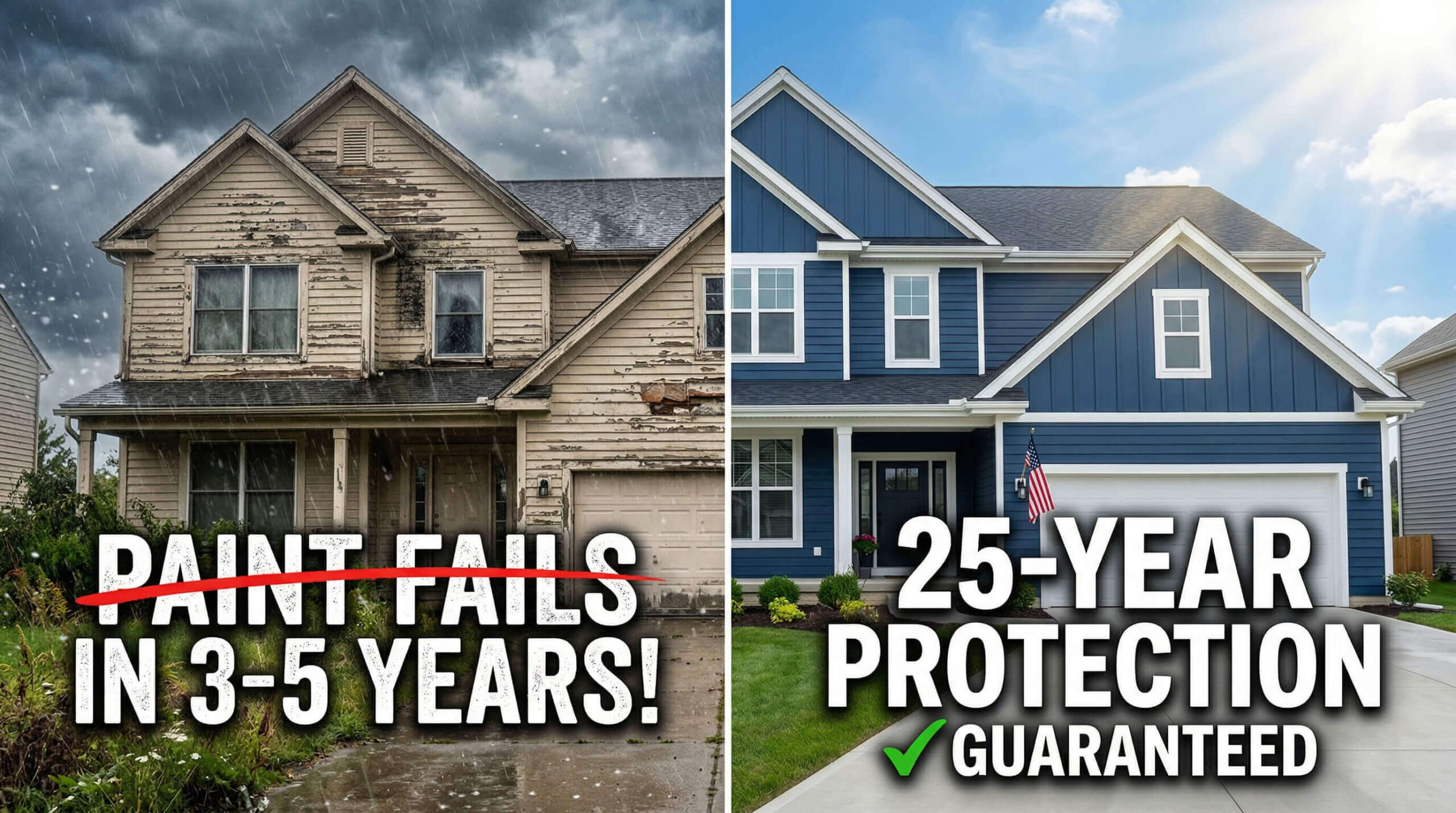
Exterior paint typically lasts 3–5 years because it breaks down under UV exposure, moisture, temperature changes, and poor application practices.
In harsh climates like Michigan, these factors accelerate damage—leading to peeling, cracking, fading, and frequent repainting cycles.
If you want a long-term solution, modern alternatives like ceramic exterior coatings are designed to last 20–25+ years with minimal maintenance.
Why Exterior Paint Fails So Quickly
1. Constant Environmental Stress (Sun, Rain & Temperature)
Your home’s exterior is under daily attack.
- UV Rays: Break down paint binders → fading, brittleness, chalking
- Moisture & Humidity: Causes blistering, mold, mildew, and peeling
- Freeze–Thaw Cycles: Expansion and contraction crack the paint layer
In climates like Michigan, this cycle repeats year-round—destroying paint faster than expected.
2. Poor Surface Preparation (The #1 Hidden Issue)
Most homeowners don’t realize:
Up to 80% of paint failure is caused before painting even begins.
Common mistakes:
- Painting over dirt, grease, or old peeling paint
- Skipping primer on wood or masonry
- Applying paint to damp surfaces
Result:
Paint fails in 1–2 seasons, not years.
3. Thin Application & Low-Quality Paint
Not all paint is built to last.
- Water-based paints shrink as they dry, leaving a thin protective layer
- Cheap paints contain fewer binders and pigments
- Single-coat applications wear out quickly
The thinner the layer, the faster UV and water break it down.
4. Wrong Application Conditions
Timing matters more than people think.
- Painting in direct sunlight → improper curing
- Painting after rain → trapped moisture
- Extreme temperatures → weak adhesion
These mistakes silently reduce lifespan.
5. Surface Type Matters (Especially Wood)
Some materials are naturally harder to protect.
- Wood siding: absorbs moisture, expands, contracts
- Requires repainting every 3–7 years
- More prone to cracking and peeling
6. The Repaint Cycle Problem
Modern exterior paint often creates a cycle:
Paint → Wear → Repaint → Repeat
Many systems are not designed for long-term durability, forcing homeowners into repainting every 5–7 years.
The Real Cost of Repainting in Michigan
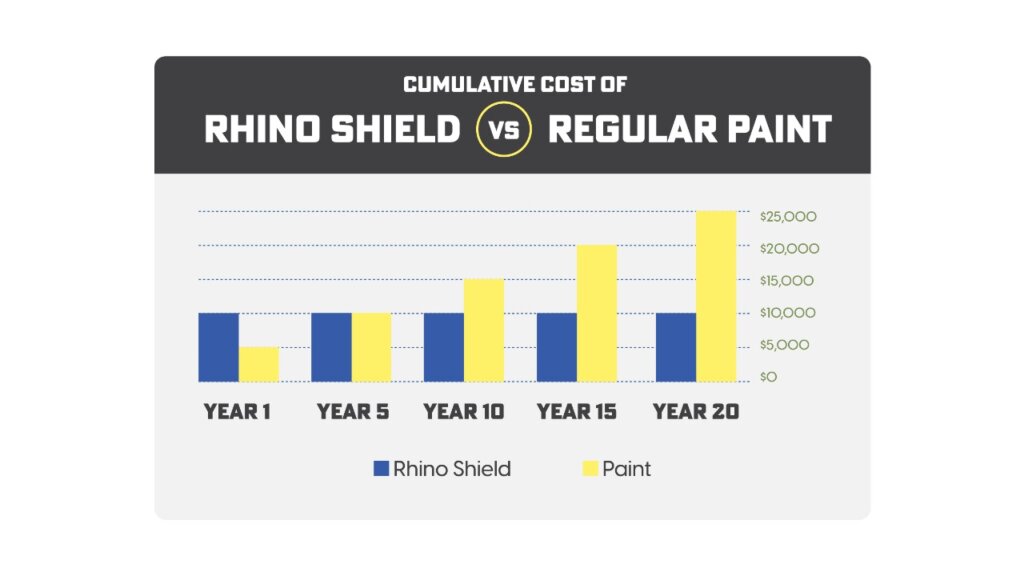
Repainting isn’t just a one-time expense—it’s recurring.
Example over 20 years:
- Repaint every 5 years
- 3–4 repaint jobs
Total cost: $15,000 – $40,000+
Plus:
- Ongoing maintenance
- Labor disruption
- Surface prep every time
Better Alternatives to Traditional Paint
This is the most advanced alternative to traditional paint. Instead of a thin cosmetic layer, it creates a durable protective coating over your home.
1. Ceramic Exterior Coatings (Best Overall Solution)
This is where systems like Rhino Shield stand out.
Unlike paint, this is a protective coating system, not a cosmetic layer.
Key advantages:
- 25-year lifespan with warranty
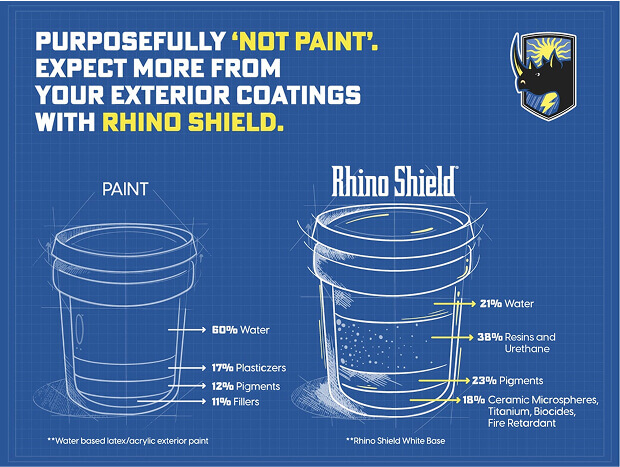
- 8–10x thicker than paint
- Waterproof yet breathable
- Expands and contracts with surfaces
- Resistant to mold, mildew, and algae
- Reflects heat → improves energy efficiency
Instead of repainting, you apply it once and protect your home for decades.
2. Elastomeric Coatings (For Masonry & Stucco)
- Much thicker than standard paint
- Can stretch and bridge small cracks
- Ideal for concrete and stucco surfaces
3. Fiber Cement Siding
- Extremely durable
- Resistant to rot, fire, and insects
- Long lifespan with minimal maintenance
4. Vinyl Siding
- Low maintenance
- Doesn’t require repainting
- Good moisture resistance
5. Wood Stain (Better Than Paint for Wood)
- Penetrates the wood instead of sitting on top
- Won’t peel like paint
- Better moisture protection
Paint vs Rhino Shield Ceramic Coating (Long-Term Comparison)
| Feature | Traditional Paint | Rhino Shield Ceramic Coating System |
|---|---|---|
| Lifespan | 3–5 years | 25+ years |
| Thickness | Thin layer | 8–10x thicker |
| Maintenance | High | Minimal |
| Weather Resistance | Low | High |
| Cracking & Peeling | Common | Rare |
| Long-Term Cost | High (repeated) | Lower (one-time) |
Who Should Consider a Better Solution?
This makes sense if:
- You’ve repainted before and don’t want to do it again
- Your home has peeling, cracking, or fading paint
- You want long-term value, not temporary fixes
- You live in a challenging climate
Conclusion:
Exterior paint is a short-term solution to a long-term problem.
If your goal is to:
- Protect your home
- Reduce maintenance
- Save money over time
Then it’s worth considering a solution designed to last decades—not just a few years.
Get Long-Term Protection for Your Home
If you’re tired of repainting and ready for a smarter solution, it might be time to explore a permanent exterior coating system.
With advanced coating technology, you can:
- Eliminate frequent repainting
- Protect your home from harsh weather
- Increase long-term value and curb appeal
Schedule your free quote today to see if your home qualifies.
Paint once… and be done for decades.
Frequently Asked Questions
Most exterior paint lasts 3–5 years in harsh climates. With perfect preparation and high-quality materials, it may last up to 7–10 years, but that’s not typical for most homes.
Paint usually peels due to moisture, poor surface preparation, and temperature changes. Water gets under the paint layer, while expansion and contraction cause it to crack and separate.
Yes, with traditional paint, repainting every 5–7 years is common. However, this creates a costly long-term cycle that many homeowners eventually want to avoid.
Upfront, yes. But over time, it’s often more cost-effective because you avoid multiple repainting projects over 20+ years.
Some advanced coatings include heat-reflective properties, which can help reduce surface temperature and improve overall energy efficiency.